
Repairs After Wind and Hail Events
Storm Damage Roofing in Spanish Fort for insurance-documented repairs following weather-related roof failures
High winds lift and tear shingles, hail impacts create bruising and punctures, and falling trees crush roof sections during severe weather, leaving properties vulnerable to water intrusion and requiring coordinated repair or replacement. Storm damage roofing involves assessment, documentation, temporary protection if needed, and permanent restoration of the roofing system after wind, hail, or impact events. Properties in Spanish Fort face thunderstorm downbursts, occasional tropical storm conditions, and sudden wind shear that can strip shingles even from recently installed roofs when gusts exceed design ratings. Armour Roof & Dek handles storm damage evaluation and insurance claim support for residential and commercial properties where weather has compromised the roofing assembly.
The process begins with detailed damage mapping to identify all affected areas, photograph evidence for adjusters, and distinguish storm damage from pre-existing wear. Wind damage typically shows as missing shingles, lifted edges, and exposed underlayment along roof edges and ridges where uplift forces concentrate, while hail damage appears as dents in metal flashing, granule loss exposing the asphalt mat, and circular impact marks across shingle surfaces.
Schedule a storm damage inspection immediately after severe weather to document conditions before additional rain events cause secondary damage that complicates insurance claims.
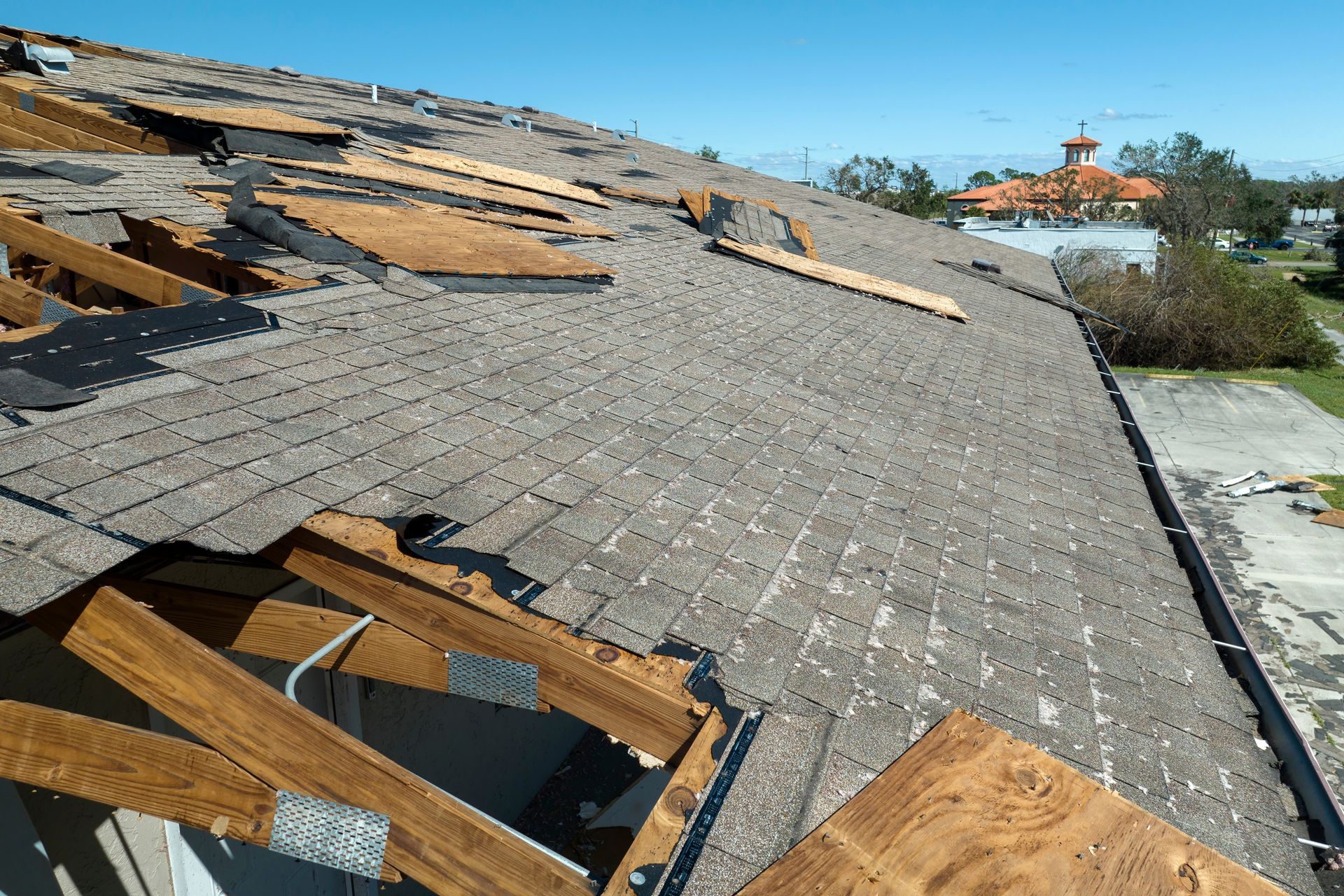
What Proper Storm Damage Assessment Requires
Assessment includes examining shingles for cracking, granule displacement, and seal failure, inspecting flashing for dents and displacement, checking gutters for hail impacts that indicate roof surface was similarly affected, and reviewing attic spaces for water staining or deck damage that indicates prior leaks. Documentation must clearly show damage causation and extent to support insurance claims, with photographs capturing close-up detail and wide-angle context shots.
Once repairs are completed, the roof once again sheds water effectively without leaks, replaced shingles match the existing color and texture, flashing sits flush and sealed against all penetrations, and the structure shows no signs of the impact or wind event that caused the original damage. Interior ceilings remain dry during subsequent storms, and the roof's appearance returns to uniform condition without obvious patched areas.
Fallen tree damage requires removal coordination with tree services before roofing work begins, and often involves deck replacement, rafter repair, and complete re-roofing of the affected section. Insurance claims for storm damage typically require adjuster site visits, contractor estimates, and proof that damage resulted from a specific weather event rather than gradual deterioration.
Common Questions About This Service
Storm damage creates urgent questions about insurance processes, repair timelines, and how to identify damage that isn't immediately obvious from the ground.
How can you tell if hail damaged your roof when shingles still look intact from below?
Hail impacts often cause bruising that weakens the shingle mat and displaces protective granules without creating obvious holes, visible only during close roof-surface inspection where circular dents and exposed asphalt indicate strike points.
What should be documented immediately after a storm for insurance purposes?
Photograph all visible damage from multiple angles, note the date and time of the weather event, document any interior leaks or water stains, and contact your insurance provider to open a claim before scheduling repair estimates.
Why does wind damage concentrate along roof edges and ridges?
Uplift forces are strongest where wind flows over and around the roof perimeter, creating suction that pulls shingles upward and breaks sealant bonds, particularly if installation nailing patterns were inadequate or shingles had already aged past peak adhesive strength.
How long after a storm should damage assessment occur?
Inspection should happen as soon as safe roof access is possible, ideally within days, to document conditions before additional weather events cause further damage or make it difficult to distinguish what resulted from the specific storm in question.
What types of storm damage are covered by standard homeowner policies in Spanish Fort?
Wind and hail damage are typically covered, while flood-related roof damage may require separate flood insurance, and wear-and-tear deterioration is excluded, making clear documentation of storm causation important for claim approval.
Armour Roof & Dek provides comprehensive storm damage assessment and works directly with insurance adjusters to document conditions and support claims for necessary repairs. Call to arrange a post-storm inspection if your property has experienced high winds, hail, or impact damage requiring professional evaluation and restoration.